
Why Your Shirt Collar Gaps at the Neck (and the Tailoring Fix That Costs Less Than a New Shirt)
A collar gap is usually a neck size or posture problem, not a defective shirt. A tailor can reshape the collar stand for a fraction of a new shirt's price.
Published
Marcus Vance
Fabric Longevity & Grooming Editor · Editor Bio → · How we research →
12 investment pieces that create 50 versatile outfits without loud designer logos.
Key Takeaways
- A collar gap (the collar lifting off the neck) is usually a neck size or posture mismatch, not a defective shirt.
- The collar stand (the band that wraps the neck) must match your neck circumference and shape.
- Shortening the collar stand is the most common fix. It costs less than a new shirt.
- Round shoulders or a forward head posture can cause a gap even in the right size.
- A tailor can assess whether the gap is fixable in a five-minute fitting.
You button your shirt collar. The back lifts off your neck and stands away like a tent. You adjust it. It gaps again. You assume the shirt is poorly made. Usually it is not.
This guide explains why collars gap, what causes it, and how a tailor fixes it.
What a Collar Gap Actually Is
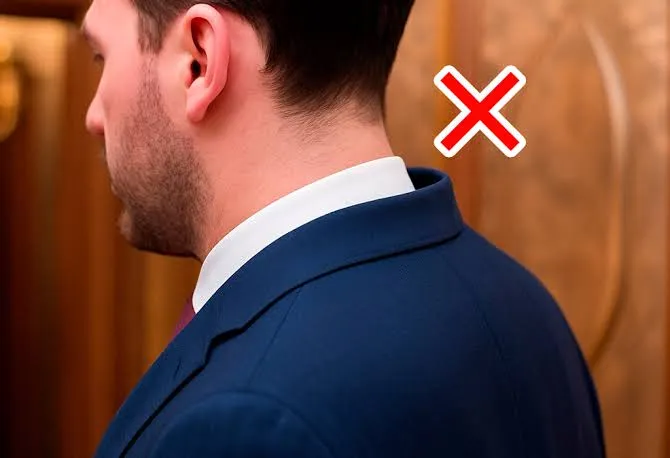
A collar gap is the space between the collar stand (the stiff band that circles the neck) and the skin of the neck. A proper collar sits flush against the neck all the way around. A gap means the collar stand is too long, too wide, or shaped wrong for your neck.
The gap is most visible at the back of the neck, where the collar lifts away from the skin. It can also appear at the sides, where the collar points away from the neck.
Cause One: The Neck Size Is Wrong
Shirt collars are sized by neck circumference in half-inch increments (15, 15.5, 16, 16.5 inches). A collar that is half an inch too large gaps all around. A collar that is half an inch too small chokes you.
Most people buy shirts by chest size or sleeve length and ignore the neck. The collar is the one part of a shirt that cannot stretch to fit. If the neck is wrong, the whole shirt looks off.
Measure your neck with a soft tape. Wrap it around the base of your neck, where the collar sits. Add half an inch for comfort. That is your collar size. If you are between sizes, go up half an inch.
Cause Two: The Collar Stand Is Too Long
Even with the right neck size, the collar stand can be too long. The collar stand is the fabric band between the shirt body and the collar. Its length determines how tightly the collar wraps the neck.
If the stand is too long, the collar cannot close fully. The ends overlap or gap. This is common in off-the-rack shirts made for an average neck shape that does not match yours.
A tailor fixes this by shortening the collar stand. They remove the collar, shorten the stand by the needed amount, and reattach the collar. The cost is usually $15 to $30. The result is a collar that hugs the neck.
Cause Three: Posture
Posture changes the shape of your neck and upper back. Round shoulders (shoulders rolling forward) push the neck forward. This creates a hollow at the back of the neck where the collar lifts away.
A forward head posture (head jutting forward) does the same thing. The collar cannot follow the neck because the neck shape has changed.
Posture fixes help. Shoulder blade squeezes (squeezing the shoulder blades together) and chin tucks (pulling the chin back) improve alignment over time. But a shirt that already gaps may need tailoring regardless.
Cause Four: Body Shape Mismatch
Off-the-rack shirts are cut for an average body. If your neck is thick relative to your shoulders, or your shoulders are narrow relative to your neck, the collar may gap even in the right size.
A shirt that fits the chest and shoulders perfectly may still gap at the neck if the neck is smaller than the pattern assumes. This is common for slim builds and for people with long necks.
What a Tailor Can and Cannot Fix
A tailor can fix most collar gaps. Here is what they can do.
- Shorten the collar stand. This tightens the collar around the neck. Works for gaps of one inch or less.
- Reshape the collar stand. This changes the angle of the collar to follow your neck shape. Works for posture-related gaps.
- Add a dart or take in the back. This removes excess fabric at the back of the neck.
A tailor cannot easily fix a collar that is more than an inch too large. In that case, the shirt is the wrong size and should be replaced. A tailor also cannot fix a collar that has stretched out from washing. Stretched collars need replacement.
How to Assess the Gap at Home
- Button the collar fully. Stand in front of a mirror.
- Look at the back of the neck. Is there a visible gap?
- Slide one finger between the collar and your neck. If two fingers fit easily, the collar is too large.
- Turn your head side to side. Does the collar shift or lift? If yes, the stand is too long.
- Check the collar points. Do they lie flat against your chest? If they flare outward, the collar is too wide.
If the gap is small (one finger or less), a tailor can likely fix it. If it is large, the shirt is the wrong size.
The Cost Comparison
A new quality dress shirt costs $60 to $120. A collar alteration costs $15 to $30. If the shirt fits well everywhere except the neck, tailoring is the smarter choice.
For shirts you already own, tailoring extends their life. A well-fitted collar makes a $40 shirt look like a $100 shirt.
Collar Types and Gap Risk
Different collar styles gap differently.
- Point collar (standard): the most common. Gaps at the back if the stand is too long.
- Spread collar: wider collar points. More prone to gaping at the sides if the neck is small.
- Button-down collar: buttons hold the collar flat. Less likely to gap, but the stand can still lift.
- Band collar (no collar, just a stand): gaps easily because there is no collar to hide the gap.
If you have a small neck, avoid spread collars. They emphasize the gap. Point or button-down collars hide it better.
Common Mistakes That Make It Worse
- Buying a shirt that fits the chest but not the neck. The neck is the hardest part to alter. Start with the neck.
- Ignoring posture. A shirt that fits today may gap next year if your posture worsens.
- Over-tightening the collar button. This stretches the stand and makes the gap worse over time.
- Washing on hot and drying on high. Heat shrinks the fabric unevenly and distorts the collar.
When to See a Tailor
See a tailor if the gap is visible and bothers you. See one if you have shirts you love that do not fit the neck. See one if you are buying a suit and want the shirt collar to sit perfectly under the jacket collar.
A good tailor will tell you honestly if the gap is fixable. If it is not, they will tell you to size down.
Frequently Asked Questions
Can I fix a collar gap at home?
Minor gaps can be fixed with collar stays (plastic or metal inserts that stiffen the collar). For a permanent fix, you need a tailor. Sewing the collar yourself risks ruining the shirt.
How much does collar alteration cost?
$15 to $30 for shortening or reshaping the collar stand. Adding a dart costs $10 to $20. These prices vary by location and tailor.
Why does my collar gap only when I wear a tie?
A tie knot adds bulk under the collar. If the collar is already tight, the tie pushes it outward and creates a gap. Use a smaller knot (four-in-hand) or size up the collar by half an inch.
Does collar gap mean the shirt is poor quality?
No. Collar gap is a fit issue, not a quality issue. Even expensive shirts gap if the neck size or stand length is wrong for your body.
A collar gap is a neck problem, not a shirt problem. Measure your neck, check the stand, and visit a tailor. The fix costs less than a new shirt and makes every shirt you own look better.