
What Is Foundation Makeup? Formulas, Coverage Levels, and Shade Selection [2026]
Foundation is a cosmetic base that unifies skin tone and conceals discoloration. Here is the direct breakdown of liquid, cream, and powder formulas, coverage tiers, and undertone matching.
Published
Sophia Chen
Senior Skincare & Ingredients Editor · Editor Bio → · How we research →
INCI-vetted cosmetics, clean certification checklists, and breathable coverage.
Key Takeaways
- Foundation is a skin-toned cosmetic product that you apply across the face to create an even skin tone.
- Formulas divide into liquid, cream, powder, and serum bases.
- Coverage tiers range from sheer skin tints to full-coverage pigments.
- You must match foundation to your jawline in natural daylight to prevent a visible line between your face and neck.
- If you have oily skin, use an oil-free matte or powder formula. If you have dry skin, use a hydrating liquid or serum formula.
What Is Foundation Makeup?
Direct Answer: Foundation is a skin-toned cosmetic base that evens facial discoloration, neutralizes redness, and provides a uniform surface for secondary cosmetics. Formulators blend mineral pigments (primarily titanium dioxide and iron oxides) into water, oil, or silicone suspensions. Foundation serves as the base layer of a cosmetic routine, applied over skincare and under concealer, blush, and setting powder.
Most consumers misunderstand the purpose of foundation. Foundation unifies surface color. It does not replace spot concealer or skin barrier moisturizer. If you apply a heavy layer to hide isolated blemishes, the makeup looks thick and artificial.
You apply foundation to soften diffuse redness and mild hyperpigmentation. Then you use a targeted cream concealer only on dark spots and active blemishes.
Foundation Formula Comparison: Liquid, Cream, Powder, and Serum
Every foundation formula uses a specific suspension base. The suspension base determines how the product interacts with your natural sebum and skincare layers.
| Formula Type | Suspension Base | Coverage Level | Finish | Best Skin Type |
|---|---|---|---|---|
| Liquid Foundation | Silicone-in-water or water-in-silicone | Medium to full | Natural, satin, or matte | Normal, combination, oily |
| Serum Foundation / Skin Tint | Water-based humectants (glycerin, squalane) | Sheer to light | Dewy, luminous | Dry, dehydrated, mature |
| Cream / Stick Foundation | Wax and lipid emollients | Medium to full | Satin to velvet | Dry, normal, hyperpigmented |
| Powder Foundation | Talc, mica, or silica minerals | Light to medium | Matte | Very oily, acne-prone |
For a deeper analysis of clean mineral formulas, review our Clean Beauty Purist Verification Guide.
How to Determine Your Coverage Level
You must match the coverage level to your specific daily needs. Wearing unnecessary coverage increases the likelihood of product settling into fine lines.
1. Sheer Coverage (Skin Tints and Tinted Moisturizers)
Sheer formulas contain 5 percent to 10 percent pigment by weight. They allow your natural skin texture, freckles, and undertones to show through. If you want a fast everyday routine, select a sheer tint.
2. Medium Coverage
Medium coverage contains 10 percent to 15 percent pigment. It disguises uneven blotchiness, broken capillaries, and minor acne marks. You can build medium coverage in thin layers without looking cakey.
3. Full Coverage
Full coverage contains 15 percent to 25 percent pigment. It covers tattoos, melasma, and pronounced redness. If you use a full-coverage product, you must use a blending sponge and set the product with a fine mist of setting spray to prevent cracking.
How to Select Your Exact Foundation Shade and Undertone
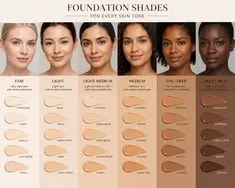
A shade match requires two distinct factors: depth and undertone. Depth describes how light or dark your skin is. Undertone describes the subtle hue beneath your surface skin.
Step 1: Identify Your Undertone
Undertones remain constant even when you tan.
- Cool Undertone: Your skin displays pink, red, or bluish hues. Silver jewelry flatters your skin. If you look at the veins on your inner wrist in daylight, they appear blue or purple.
- Warm Undertone: Your skin displays yellow, golden, or olive hues. Gold jewelry flatters your skin. Your wrist veins appear greenish.
- Neutral Undertone: Your skin displays a balance of pink and golden tones. Both silver and gold jewelry suit you. Your veins appear blue-green.
Step 2: The Jawline Swatch Protocol
Do not test foundation on your wrist or the back of your hand. Your hands receive more sun exposure than your face and neck.
- Wipe your jawline with a gentle cleansing wipe.
- Apply three thin stripes of candidate shades from the lower cheek down across your jawbone onto your neck.
- Wait three minutes. Pigments darken slightly as the volatile carrier oils evaporate.
- Step near a window with indirect outdoor daylight.
- The correct shade is the one that disappears completely into both your cheek and your neck.
If your foundation turns orange after three hours, sebum has oxidized the iron oxide pigments. To prevent this, apply a silica-based makeup primer to buffer skin oils.
The Four-Step Application Protocol
Follow these procedural steps to apply liquid or cream foundation without streaks:
- Prepare the skin barrier. Cleanse your face and apply a lightweight moisturizer. Wait 60 seconds until the moisturizer absorbs.
- Dispense product sparingly. Pump one pea-sized drop onto the back of your hand. Excess product causes pilling and sliding.
- Dot on the center of the face. Place small dots on your forehead, nose, cheeks, and chin. The center of the face requires the most color correction.
- Blend outward toward the hairline. Use a damp polyurethane sponge or a dense synthetic buffing brush. Press and tap the product into the skin. Do not drag the applicator across your face.
For the full catalog of professional application techniques and longevity fixes, explore our comprehensive Makeup Artistry & Formulations Pillar.
Frequently Asked Questions
What is the difference between foundation and concealer?
Foundation covers your entire face with a thin veil of pigment to unify overall tone. Concealer contains double the pigment density of foundation. You apply concealer sparingly only to specific blemishes, dark under-eye circles, and stubborn marks.
Should you apply primer before or after foundation?
You must apply makeup primer before foundation. Primer sits between your skincare and your foundation. It creates a smooth barrier that fills pores, balances skin oil, and extends makeup wear time.
Why does my foundation separate or look cakey?
Foundation separates when you layer conflicting chemical bases. For example, applying a water-based foundation over a silicone-heavy sunscreen causes the layers to repel each other. Make sure that you pair water-based foundations with water-based primers, and silicone foundations with silicone primers.