
Why Your Heat Protectant Isn't Preventing Damage (and the Application Mistake)
Heat protectant fails when applied to wet hair, in the wrong amount, or too close to the scalp. Applying to dry hair before styling fixes it.
Published
Marcus Vance
Fabric Longevity & Grooming Editor · Editor Bio → · How we research →
Bond-repair chemistry, wash temperature rules, and protein-moisture balance.
Key Takeaways
- Heat protectant fails when applied to wet hair, in the wrong amount, or too close to the scalp.
- Heat protectant works by forming a film on the hair shaft that distributes heat evenly and reduces direct contact.
- Applying to wet hair dilutes the product. The water evaporates and takes the protectant with it.
- Heat protectant does not prevent all damage. It reduces it. Lower temperatures are still better.
- Silicone-based protectants work better than oil-based ones for high-heat styling.
You spray heat protectant. You flat iron your hair. It still feels dry and brittle. You wonder if heat protectant is just marketing. Usually it is not. The application is wrong.
This guide explains how heat protectant works, why it fails, and how to use it correctly.
What Heat Damage Is
Heat damage is structural damage to the hair shaft. Hair is made of keratin (a protein) arranged in a cortex (inner layer) surrounded by a cuticle (outer protective layer).
Heat above 180 degrees Celsius (356 degrees Fahrenheit) denatures the keratin. The protein structure breaks down. The cuticle lifts and cracks. The hair becomes rough, dry, and brittle.
Heat damage is permanent. Damaged hair cannot be repaired. It must be cut off.
How Heat Protectant Works
Heat protectant forms a thin film on the hair shaft. This film does three things.
- Distributes heat evenly. Instead of heat concentrating on one spot, it spreads across the hair surface. This prevents hot spots that cause localized damage.
- Slows heat conduction. The film acts as a barrier. It slows the transfer of heat from the tool to the hair shaft. This gives the hair more time to dissipate heat.
- Reduces moisture loss. Heat evaporates water from the hair. The film seals the cuticle and reduces water loss.
Heat protectant does not prevent damage completely. It reduces it. Lower temperatures are still better than higher ones.
Cause One: Applying to Wet Hair
The most common mistake is applying heat protectant to wet hair. Heat protectant is designed for dry or damp hair, not wet hair.
Water on the hair dilutes the product. The water evaporates when heat is applied. The protectant evaporates with it. The hair is left unprotected.
Apply heat protectant to dry or slightly damp hair. If your hair is wet, towel dry first. Then apply the protectant. Wait 1 to 2 minutes for it to dry before using heat.
Cause Two: Applying Too Little
Using too little protectant leaves gaps in the film. The hair is unprotected in those areas. Heat damage occurs where the protectant is thin.
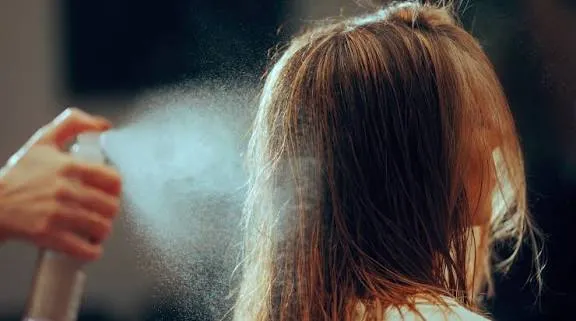
Use enough product to coat the hair evenly. For a spray, use 5 to 10 sprays. For a cream or serum, use a pea-sized amount. Distribute evenly with a comb.
Apply section by section. Do not spray the whole head at once. Section the hair. Apply to each section. This ensures even coverage.
Cause Three: Not Letting It Dry
Applying heat to wet protectant causes the product to boil. The water in the product evaporates violently. This can damage the hair and cause the protectant to flake.
Let the protectant dry completely before using heat. Wait 1 to 2 minutes. The hair should feel dry to the touch.
If you are in a rush, use a blow dryer on cool to speed up drying. Then use the heat tool.
Cause Four: Wrong Product for the Tool
Different heat tools need different protectants.
- Flat irons and curling wands (direct heat, 180 to 230 degrees Celsius): need a silicone-based protectant. Silicones (dimethicone, cyclomethicone) withstand high heat and form a strong film.
- Blow dryers (indirect heat, 60 to 80 degrees Celsius): need a lighter protectant. A spray or mist is sufficient.
- Hot brushes and curling irons (medium heat): can use either.
Oil-based protectants (argan oil, coconut oil) are not effective for high-heat styling. Oils have low smoke points (around 180 degrees Celsius). They burn at flat iron temperatures and cause damage.
Use a silicone-based protectant for flat irons and curling wands. Use a lighter spray for blow drying.
Cause Five: Using Too High a Temperature
Heat protectant reduces damage but does not eliminate it. Using a flat iron at 230 degrees Celsius (450 degrees Fahrenheit) causes damage even with protectant.
Keep the temperature below 180 degrees Celsius (356 degrees Fahrenheit). This is hot enough to style most hair types. Higher temperatures are only needed for very thick or coarse hair.
Fine and damaged hair should be styled at 150 to 160 degrees Celsius (300 to 320 degrees Fahrenheit). Lower temperatures reduce damage.
Cause Six: Styling Wet Hair
Using a flat iron or curling wand on wet hair causes severe damage. The water in the hair shaft boils. It expands and bursts the cortex. This is called "bubble hair" and causes irreversible damage.
Always dry your hair completely before using direct heat tools. Blow dry first, then use the flat iron or curling wand.
Cause Seven: Not Using Protectant at All
Some people skip heat protectant because they think it is unnecessary. It is necessary. Even one pass with a flat iron at 200 degrees Celsius causes some damage. Protectant reduces this.
Use heat protectant every time you use heat. No exceptions. It takes 30 seconds and prevents cumulative damage.
The Right Heat Styling Routine
- Wash and condition hair.
- Towel dry. Remove excess water.
- Apply heat protectant to damp hair (for blow drying) or dry hair (for flat iron/curling wand).
- Distribute evenly with a comb.
- Let it dry completely (1 to 2 minutes).
- Blow dry on medium heat. Keep the dryer moving. Do not concentrate on one spot.
- Section the hair.
- Use the flat iron or curling wand at the lowest effective temperature.
- Use one pass per section. Do not go over the same section multiple times.
- Apply a small amount of oil or serum to the ends after styling.
How to Tell If You Have Heat Damage
Signs of heat damage include.
- Split ends: the hair shaft splits at the tip.
- Rough texture: the hair feels rough and dry.
- Loss of elasticity: the hair does not stretch and bounce back. It breaks.
- Dullness: the hair looks dull and lacks shine.
- Frizz: the cuticle is lifted. The hair frizzes in humidity.
- Breakage: hair breaks off mid-shaft.
If you have these signs, the damage is already done. Cut off the damaged hair. Use heat protectant and lower temperatures going forward.
Common Mistakes That Make It Worse
- Applying to wet hair. Apply to dry or damp hair.
- Using too little product. Coat the hair evenly.
- Not letting it dry. Wait 1 to 2 minutes.
- Using oil-based protectant for high heat. Use silicone-based.
- Using too high a temperature. Keep below 180 degrees Celsius.
- Styling wet hair with direct heat. Always dry first.
- Skipping protectant. Use it every time.
When to See a Hairstylist
See a hairstylist if you have significant heat damage. See one if you want a professional treatment (keratin, Olaplex) to repair bonds. See one if you want advice on heat styling techniques.
Frequently Asked Questions
Does heat protectant really work?
Yes, when used correctly. It reduces heat damage by 50 to 70 percent. It does not prevent all damage. Lower temperatures are still better.
Can I use oil as a heat protectant?
No, for high heat. Oils have low smoke points and burn at flat iron temperatures. Use oil for finishing, not for heat protection.
How much heat protectant should I use?
5 to 10 sprays for a spray. A pea-sized amount for a cream or serum. Apply section by section for even coverage.
Is 200 degrees Celsius safe with heat protectant?
It is safer than without protectant. But it still causes some damage. Keep below 180 degrees Celsius for best results.
Heat protectant works when applied correctly. Apply to dry or damp hair. Use enough product. Let it dry. Use silicone-based for high heat. Keep temperatures low. The hair stays healthier and the style lasts longer.