
Why Your Foundation Oxidizes and Changes Color (and the pH Problem Behind It)
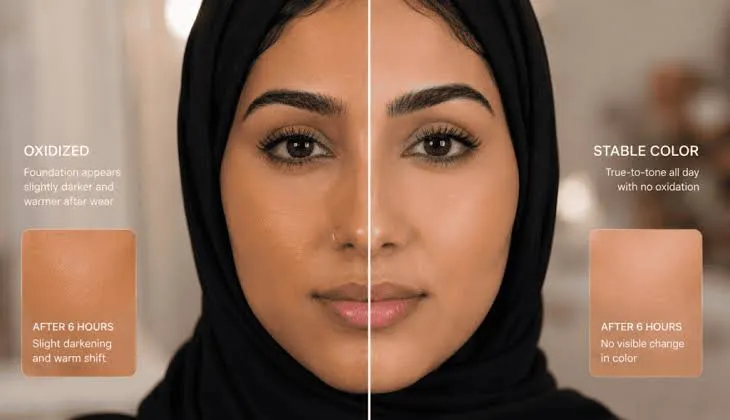
Foundation oxidizes when it reacts with skin oils and air. The color darkens or turns orange. Choosing the right formula and primer prevents it.
Published
Marcus Vance
Fabric Longevity & Grooming Editor · Editor Bio → · How we research →
Our comprehensive library of ingredient breakdowns, product tests, and barrier protocols.
Key Takeaways
- Foundation oxidizes when it reacts with skin oils, air, and the skin's pH.
- The color darkens or turns orange within 30 minutes to 2 hours of application.
- Oily skin accelerates oxidation because sebum (skin oil) reacts with the foundation.
- A primer creates a barrier between the skin and foundation, slowing oxidation.
- Choosing a foundation with stable pigments reduces oxidation.
You apply foundation. It matches your skin perfectly. An hour later, it is darker. Or orange. You wonder if the foundation is defective. Usually it is not. The foundation has oxidized.
This guide explains why foundation oxidizes, what causes it, and how to prevent it.
What Oxidation Is
Oxidation is a chemical reaction. It happens when foundation is exposed to oxygen in the air. The oils and pigments in the foundation react with oxygen. This changes the color.
Oxidation is the same process that turns a cut apple brown. The apple's flesh reacts with oxygen. Foundation does the same thing.
Foundation oxidation is most visible in the first 30 minutes to 2 hours after application. The color darkens or shifts to orange. This is more noticeable on light skin tones.
Why Foundation Oxidizes
Three factors cause oxidation.
1. Skin Oils (Sebum)
Sebum (skin oil) is the primary cause. Sebum contains lipids (fats) that react with the foundation. The oils in sebum mix with the oils in the foundation. This accelerates the oxidation reaction.
Oily skin produces more sebum. More sebum means faster oxidation. This is why foundation oxidizes faster on oily skin.
Dry skin produces less sebum. The foundation sits on top and oxidizes more slowly.
2. Skin pH
Skin pH (acidity) ranges from 4.5 to 5.5. Some foundations are formulated at a different pH. When the foundation meets the skin, the pH difference causes a reaction. This can change the color.
Foundations with iron oxides (pigments) are especially pH-sensitive. A shift in pH can make the iron oxides darker or more orange.
3. Air Exposure
Foundation is exposed to air when you apply it. Oxygen in the air reacts with the oils and pigments. This causes gradual darkening.
The longer the foundation is on the skin, the more it oxidizes. This is why foundation looks different at noon than at 8 AM.
Which Foundations Oxidize Most
Not all foundations oxidize equally.
- Oil-based foundations: oxidize more. The oils react with skin sebum and air.
- Water-based foundations: oxidize less. Water does not react with oxygen as easily.
- Silicone-based foundations: oxidize less. Silicones are stable and do not react.
- Matte foundations: oxidize more. They contain more pigments and less oil.
- Dewy foundations: oxidize less. They contain more water and less pigment.
If your foundation oxidizes, switch to a water-based or silicone-based formula. These are more stable.
Cause One: Oily Skin
Oily skin produces more sebum. More sebum means faster oxidation. The foundation darkens within 30 minutes.
The fix is to control oil before applying foundation.
- Cleanse with a gentle, pH-balanced cleanser.
- Apply an oil-free moisturizer.
- Wait 5 minutes for absorption.
- Apply a mattifying primer. This creates a barrier between the skin and foundation.
- Apply foundation.
The primer absorbs excess oil and creates a barrier. The foundation does not contact the skin directly. Oxidation is reduced.
Cause Two: No Primer
Primer creates a barrier between the skin and foundation. Without primer, the foundation contacts the skin directly. Sebum and pH affect the foundation. Oxidation is faster.
Use a primer that matches your foundation base (water or silicone). Apply a thin layer. Let it dry before applying foundation.
Cause Three: Wrong Shade
If you choose a shade that is too light, oxidation makes it look orange. If you choose a shade that is too dark, oxidation makes it look darker.
Choose a shade that matches your skin tone exactly. Do not go lighter. Lighter shades oxidize more noticeably.
If you are between shades, choose the darker one. Oxidation will darken it further. A darker shade that oxidizes is closer to your skin tone than a lighter shade that oxidizes.
Cause Four: Applying Too Much
Thick layers of foundation oxidize more. The excess product sits on the surface. It has more contact with air and sebum. The oxidation is more visible.
Apply thin layers. One pump is enough for the whole face. Build coverage only where needed. Thin layers oxidize less and look more natural.
How to Test for Oxidation
Before buying a foundation, test it for oxidation.
- Apply a small amount to your jawline.
- Wait 30 minutes.
- Check the color. Has it darkened? Has it turned orange?
If yes, the foundation oxidizes. Choose a different formula or a darker shade.
The Right Application Routine
- Cleanse with a gentle cleanser.
- Apply oil-free moisturizer. Wait 5 minutes.
- Apply primer (water or silicone, matching your foundation). Wait 2 minutes.
- Apply foundation in thin layers. Use a damp sponge.
- Set with a light dusting of translucent powder.
- Finish with setting spray.
How to Fix Oxidized Makeup
If your foundation has already oxidized, you can fix it.
- Blot oil with a tissue. Remove excess sebum.
- Use a damp sponge to press the foundation back into the skin. This re-blends the product.
- Apply a light dusting of powder to set.
- If the color is still off, apply a lighter concealer or powder to brighten.
Do not add more foundation. This makes the oxidation worse.
Common Mistakes That Make It Worse
- Not using primer. Primer creates a barrier.
- Choosing a shade that is too light. Choose your exact shade or slightly darker.
- Applying too much product. Thin layers only.
- Using oil-based foundation on oily skin. Switch to water-based or silicone-based.
- Not setting with powder. Powder locks the foundation in place.
When to See a Makeup Artist
See a makeup artist if you cannot find a foundation that works. See one if you want to learn proper application technique. See one if you have a special event and want flawless makeup.
A good makeup artist will assess your skin type and recommend products and techniques.
Frequently Asked Questions
Why does my foundation turn orange?
Oxidation. The foundation reacts with skin oils and air. The color darkens or shifts to orange. Use a primer and choose a darker shade.
Can I prevent oxidation completely?
No. But you can slow it down. Use primer. Choose a water-based or silicone-based formula. Apply thin layers. Set with powder.
Does foundation type matter?
Yes. Water-based and silicone-based foundations oxidize less. Oil-based and matte foundations oxidize more. Choose based on your skin type.
How do I choose the right shade?
Choose a shade that matches your skin tone exactly. Do not go lighter. Test it on your jawline. Wait 30 minutes. Check if it oxidizes.
Foundation oxidation is a skin and formula problem. Use primer. Choose the right formula. Apply thin layers. Set with powder. The color stays true all day.