
Why Your Cuticles Split Even in Winter While Your Hands Stay Soft: The Cuticle-Baseline Gap
Hand creme moisturizes the palmar skin but barely touches the nail plate's edge, where the cuticle is the only seal against water escape. Daily cuticle oil + a barrier balm at the fold is the fix.
Published · Updated
The Fashion & Beauty Editorial
Lead Editorial Collective · Editor Bio → · How we research →
Our comprehensive library of ingredient breakdowns, product tests, and barrier protocols.
Key Takeaways
- The nail plate is a dead, keratinized structure with no living cells; it absorbs water and loses it fast, which is why it cracks first in dry air.
- Hand cream moisturizes the living palmar skin but rarely reaches the nail-fold junction where the cuticle lives, creating a "moisturized hands, split cuticles" mismatch.
- The cuticle is the nail's seal against infection; splitting it = a direct route for water loss and microbes.
- Oil at the cuticle (rich in linoleic acid) plus an occlusive balm at the fold fixes the gap; creme alone does not.
You slather on hand cream three times a day and your palms are soft, but your cuticles are splitting and bleeding by February. The cream is winning on your skin and losing at the nail fold — because the cuticle is a separate tissue with a separate water problem.
On r/Nails, "splitting cuticles" is a common topic, and the usual self-diagnosis is the same: "I use hand cream constantly, so why are my cuticles still breaking?" Almost never the answer: the cuticle is not palmar skin.
Why the Cuticle Is a Different Tissue
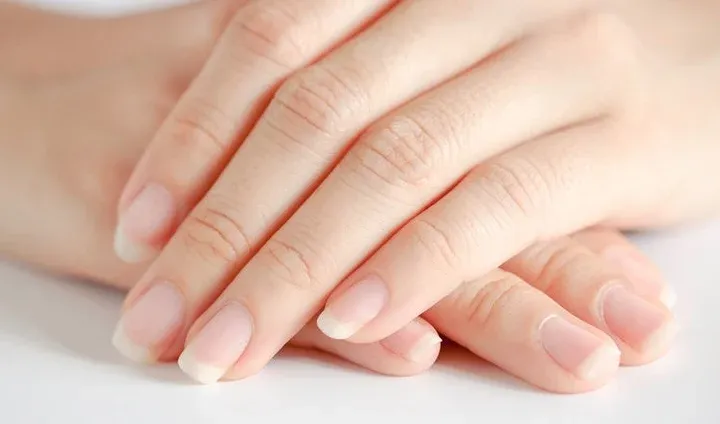
The nail unit is made of three parts that behave differently: the nail plate (the visible " nail"), the nail bed (living skin underneath), and the proximal/lateral nail folds plus the cuticle (the thin, translucent skin at the base). The cuticle is the body's natural occlusive — it seals the space between the plate and the fold, blocking water escape and pathogen entry.
Unlike the palmar skin on the back of your hand, the cuticle has almost no sebaceous glands. It cannot self-moisturize. Rubbing hand cream over it deposits emollients on top but does not penetrate the fold, so the seal dries out and splits from the inside.
Why Cream Alone Misses
Most hand creams are oil-in-water emulsions designed to hydrate keratinized epidermis. The ingredients that soften the palm (glycerin, shea, dimethicone) sit on the surface. The nail fold is a narrow crevice; surface tension keeps the water-based phase from wetting it. That is why you can have perfectly moisturized hands and a split, bleeding cuticle on the same finger.
The Two-Part Fix
- Oil first. A cuticle oil rich in linoleic acid (jojoba, sunflower, or squalane) wets the fold because oils have low surface tension. Apply a single drop to the edge of the cuticle and let it penetrate 60 seconds.
- Occlusive second. A petrolatum or lanolin balm over the fold locks the oil in. Do this once daily and at night; in winter, twice daily.
Push the cuticle back only when it is soft (after the oil + a warm towel), never when it is dry and brittle — that is when it tears. The goal is not to remove the cuticle but to keep it intact as a seal.
Why Your Heels Crack Every Winter Even With Daily Lotion Hand Cream That Actually Works
Frequently Asked Questions
Is it safe to cut a hanging cuticle?
No. Only trim hangnails (the small, loose flaps at the fold). A hanging cuticle that you snip with scissors almost always splits further and invites infection. Soften first, then push back gently.
Can I use regular lotion instead of cuticle oil?
Regular lotion is too water-heavy and evaporates too fast. The oil phase in cuticle oil is what wets the fold. If you must substitute, use a pure carrier oil (one drop) over the lotion.
Why do cuticles get worse in winter specifically?
Indoor heating drops relative humidity to 20-30%, and the nail fold has no sweat or sebaceous glands to buffer that. The skin at the fold loses water far faster than in humid months.
Your cuticles split while your hands stay soft because hand cream hydrates the palm but can't wet the nail fold where the cuticle seals. Oil + occlusive at the fold, twice daily in winter, is the gap fix.